 YIVAHUB
Client Record: Loading Nights at a Guangdong Consolidation Warehouse
2026-10-20 · YIVAHUB Team
The client sells lighting online, and the range is deliberately wide: ceiling, wall, pendant and decorative pieces across several finishes, sizes and price points, each in its own carton, none of it big enough on its own to fill a container. The goods arrive from a number of suppliers over several weeks. What leaves is one 40 ft high-cube, sealed, with a counted packing list and a photograph of every block inside it.
The photographs below are from four separate loadings across June 2026, not one container. They are published together because the process looks the same every time, and because four nights is an ordinary month here. The dated version, grouped by night, is in the container loading log.
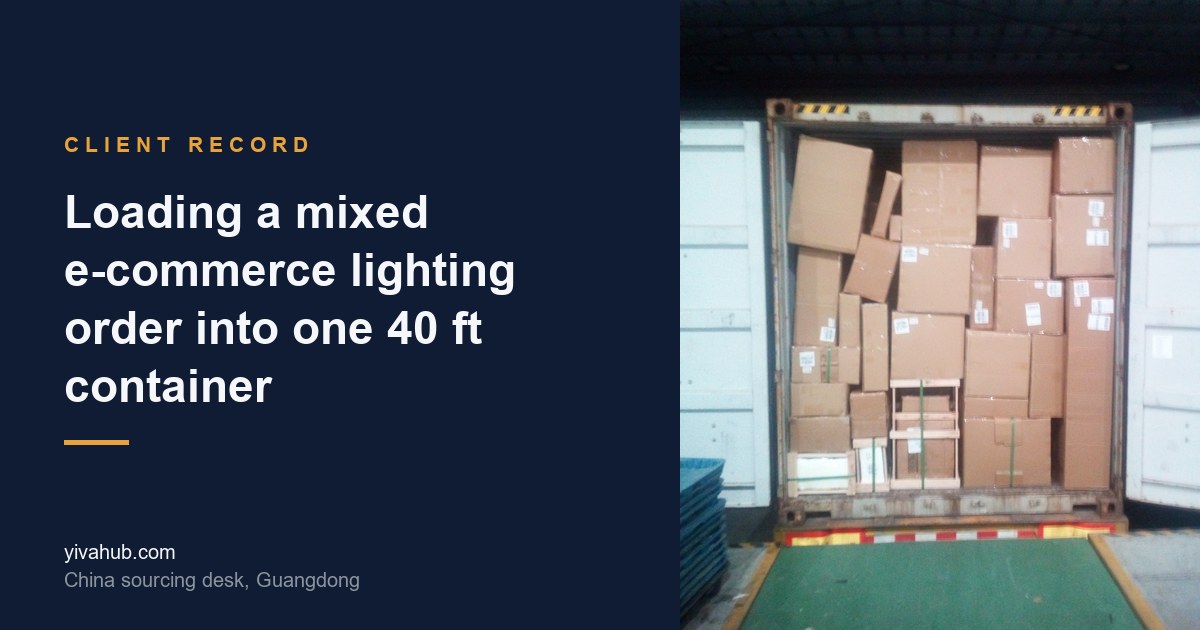
A factory order is simple. A mixed order is a different job. Buy one product from one supplier and a container is arithmetic: one carton specification, one packing list, load it until it is full. This order was the opposite. The goods came from different factories and trading suppliers across Guangdong, in cartons of every proportion — tall and thin cartons standing upright next to wide flat ones, heavy units next to light ones — and they arrived on different dates. Between those parcels arriving and one clean, sealed container, the work is receiving, counting, checking, consolidating, re-palletising, strapping, labelling and documenting. Mixed orders are rarely lost on the water. They are lost in the counts.
What the photographs show. Every carton in these pictures is sealed, and that is the point: on the dock we handle boxes, and what is inside a box is only visible on the packing list. That is exactly why the counting and the photo record matter more on a mixed order than on a single-product one.
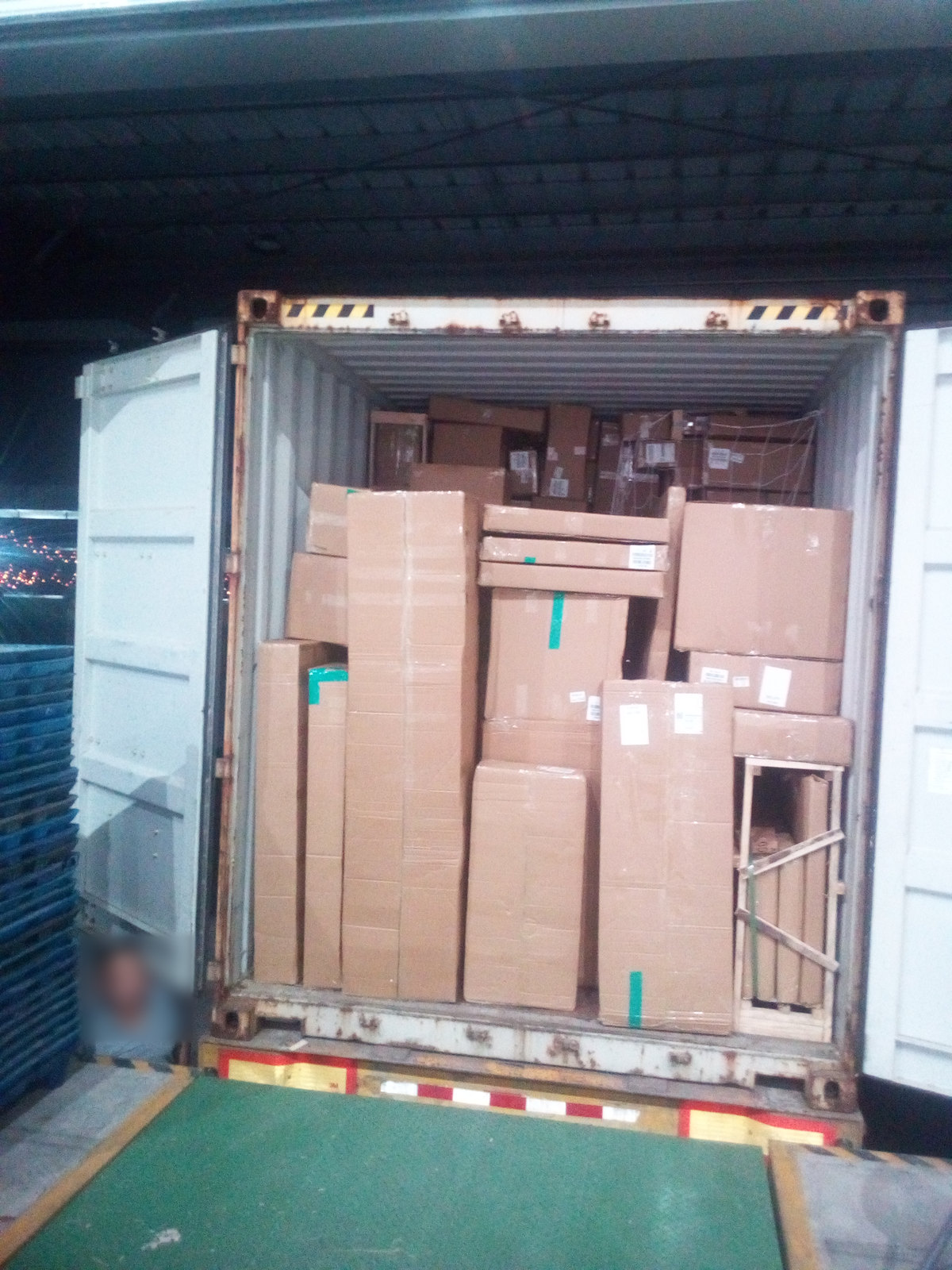
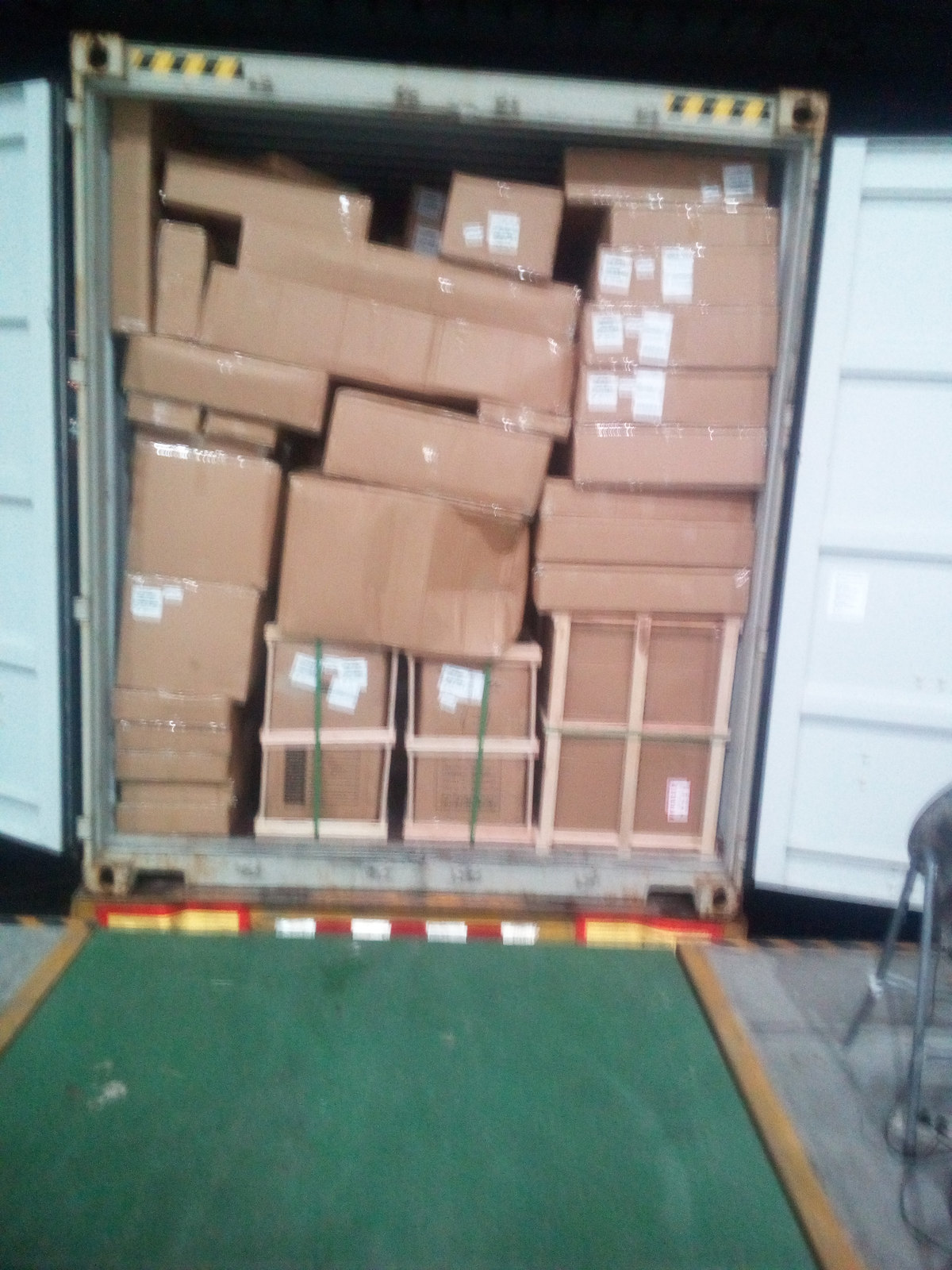
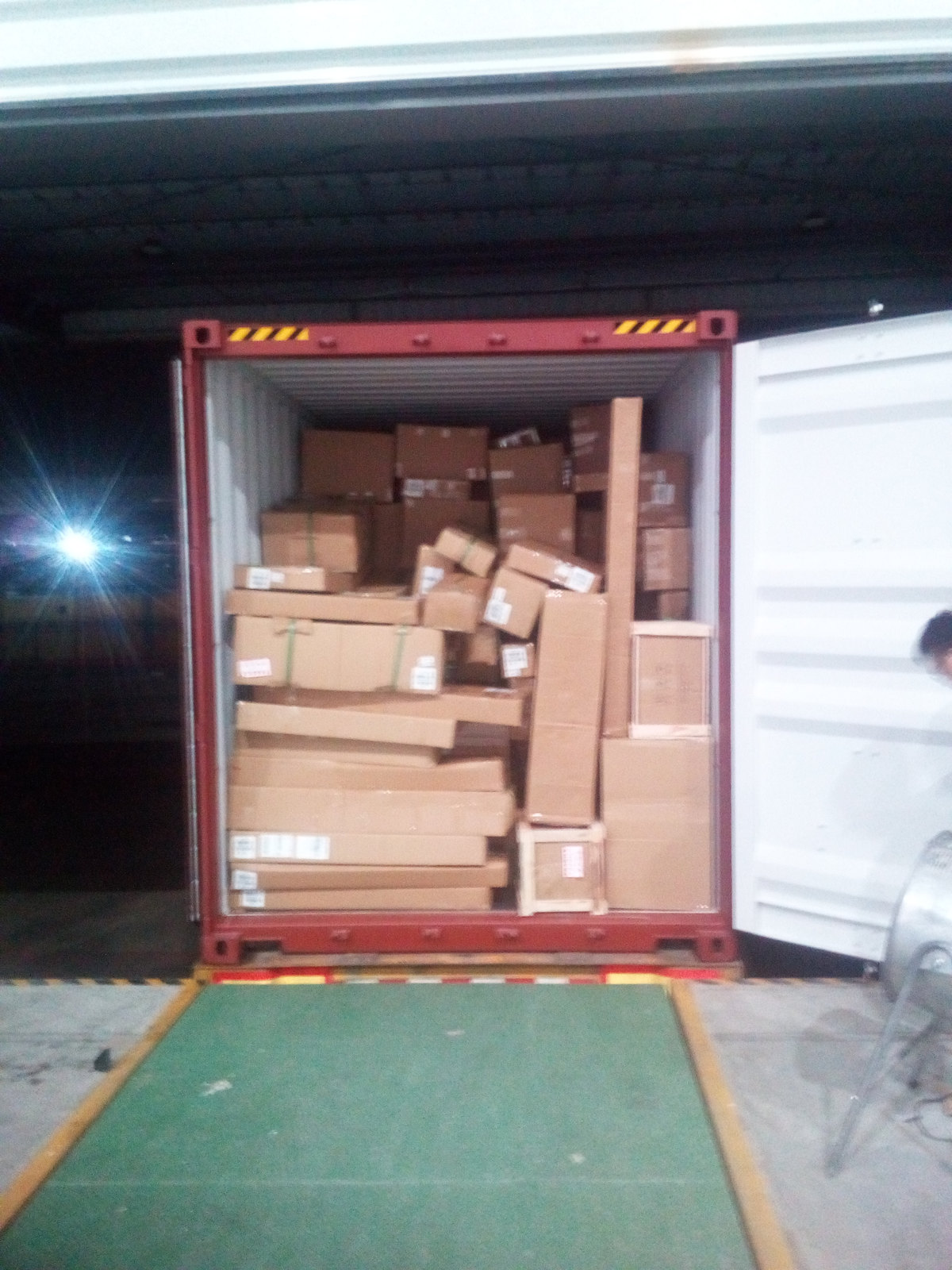
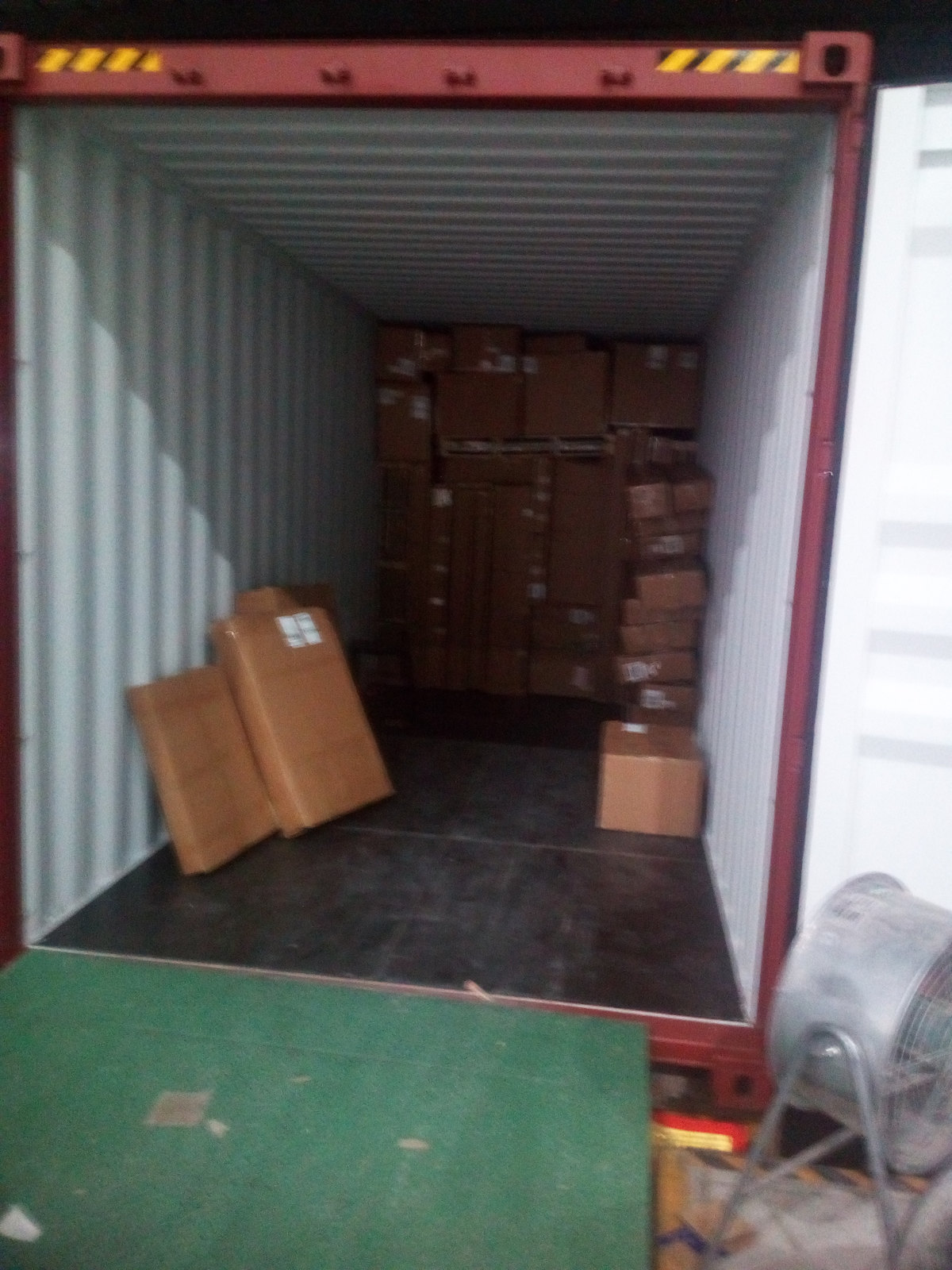
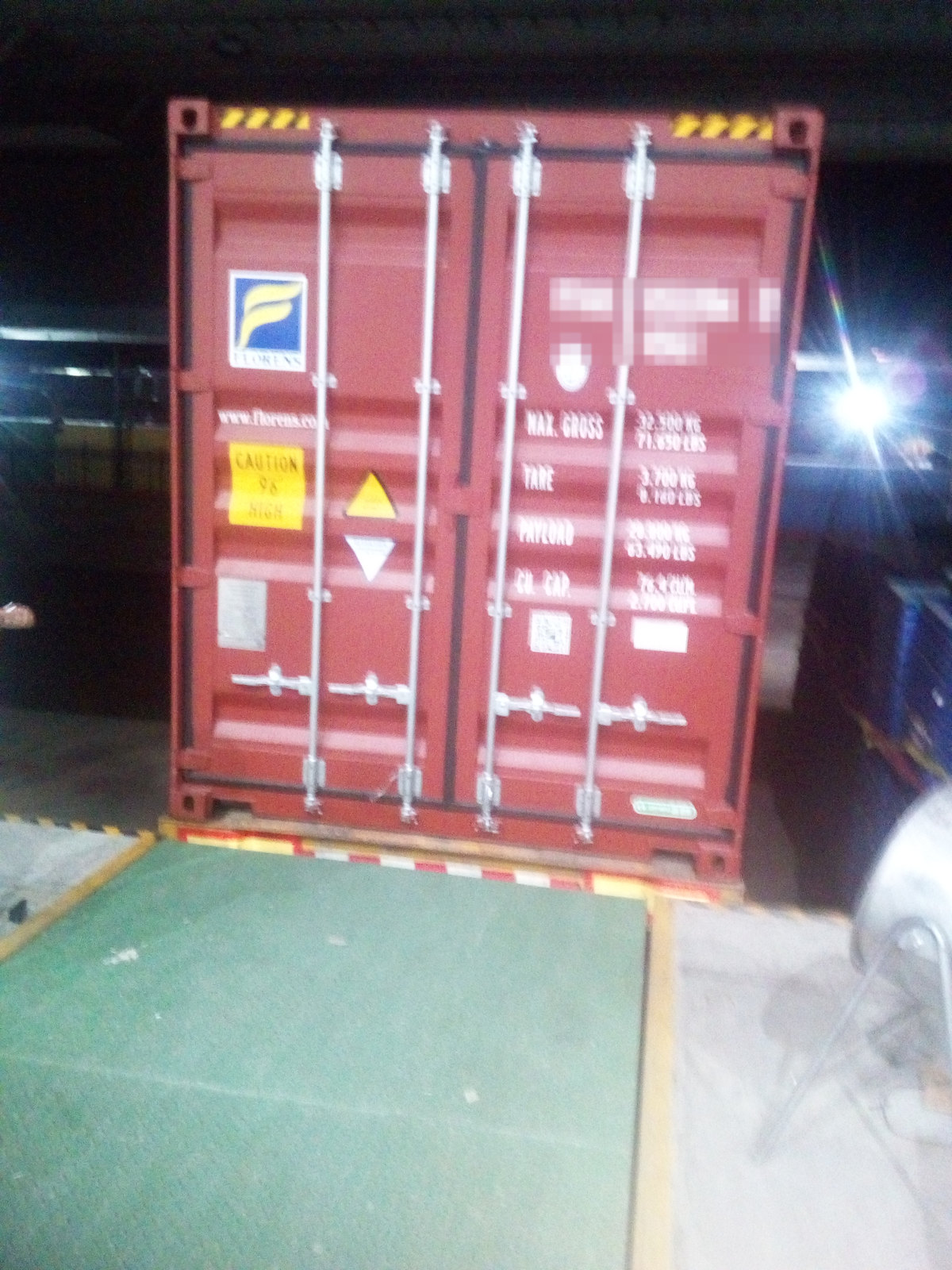
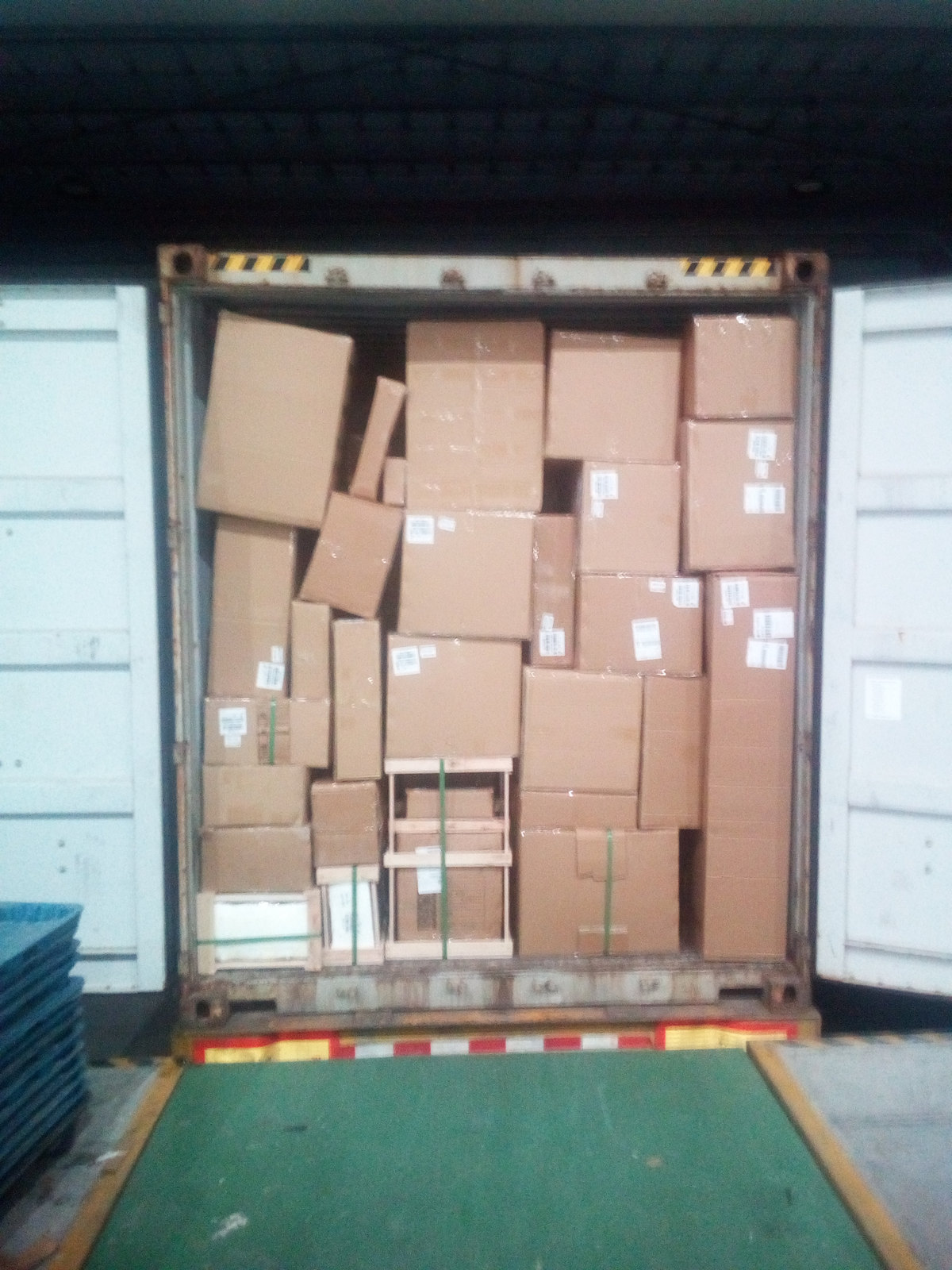
Before the doors close. This is the checklist we run on every mixed container, and every line of it exists because skipping it has cost somebody money.
The count is taken at the dock, not copied from the suppliers. Cartons are tallied as they are loaded, and the packing list that travels with the container is the counted one. On a mixed order the interesting number is not the total, it is the per-SKU line: nine cartons of one model and three of another is exactly the kind of difference that is cheap to fix at the dock and expensive to argue about after arrival.
Condition is inspected carton by carton. Water damage, crushed corners and split tape get photographed, set aside and reported the same day. Anything that is repacked is repacked with the client's labels, not with whatever tape is nearest.
Pallet bases, strapping and stacking. Cartons go on timber or plastic bases rather than bare on the floor, strapped in blocks. Heavy goods go low and toward the front, light cartons fill the top, and nothing is braced against the doors. A mixed load is where bad stacking shows up first, because the cartons do not fit each other neatly.
Weight distribution gets checked, not estimated. Axle limits matter to the truck that collects the container, and overweight is a problem you cannot fix once the doors are closed and the seal is on.
The photo record is part of the shipment, not marketing. Every pallet face, the loading in progress, the packed interior and the closed doors with the container number and seal: this is the evidence that answers questions later, from the client's own warehouse or from a marketplace fulfilment centre asking why a carton arrived short.
The file the client receives. The same day the container leaves, the client gets the photo set, the container and seal numbers, the packing list as counted, and an exception list: what was short, damaged, substituted or late, written down while it is still fresh. Two things follow from that. Nothing about the shipment relies on somebody's memory, and any claim at the destination — from a carrier, a warehouse or an insurer — can be answered with dated photographs instead of a discussion.
If you are buying a mixed order yourself, ask for five things. A packing list counted at the dock rather than inside an office; loading photographs, including the sealed doors with the container number in shot; the container and seal numbers on the day the container ships; carton dimensions and weights per SKU, so your inbound planning and storage maths rest on real numbers; and a written exception list from the loading. None of it is expensive to provide, and a supplier or agent who cannot provide it is telling you something about how the order is being handled.
Where this fits. Mixing orders from several suppliers into one container — consolidation — is the least glamorous part of sourcing and the part that decides whether goods arrive as one clean shipment or as a set of arguments. The checks above sit alongside the inspection side of the work, and the dimensions we record are the same data you need for marketplace prep and for the volume maths in our guide to choosing between sea and air. If your next order is a mixed one, the numbers to start from are the product, the quantity and the destination.